
As we observe Black Maternal Health Week, we are learning of a heartbreaking tragedy. On late Wednesday, Former Virginia Lieutenant Governor Justin Fairfax — a once rising star in the Democratic Party — shot and killed his wife, Cerina Fairfax, inside their home and then killed himself. The couple was in the middle of a contentious divorce. What makes it more disturbing is that the couple’s two teenage children were inside the home when the shootings occurred. Their son placed the 911 call.
As friends and family grieve Cerina’s death, we focus on data for Black women in the U.S. and domestic violence. The statistics are staggering — and they are getting worse. For example, between 2010 and 2021, the number of Black women killed by guns tripled, with domestic violence driving a lot of this increase. Shockingly, Black women:
- Represent only 14 percent of the U.S. female population but account for 31 percent of intimate partner homicides.
- Were murdered by males at a rate of 3.1 per 100,000 in 2023— two and a half times the rate for white females; and
- Are five times more likely to die by firearm during pregnancy.
The Double Safety Crisis of Black Maternal Health

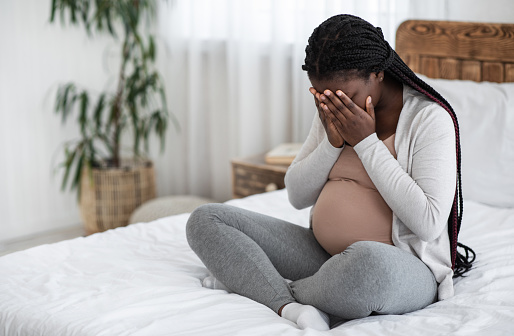
When we think about the risks of being Black and pregnant we usually talk about medical neglect, hemorrhage, and preeclampsia. However, the maternal mortality risk we don’t talk about enough is murder.
Homicide is one of the leading causes of death for pregnant and postpartum women. In 2020, firearms accounted for 81 percent of homicides of pregnant women — and 55 percent of those homicide victims were Black. Pregnancy is supposed to be a time of protection and care. Instead, for far too many Black women, it is a time of heightened vulnerability — when a partner’s jealousy, insecurity, or desire for control becomes lethal.
If You Are at Risk: What to Do Right Now
If you are in a relationship where you feel afraid, controlled, or in danger, please know: you are not alone, and this is not your fault. Here are concrete steps to protect yourself:
- Tell your OB or midwife about your home situation. Healthcare providers are required to screen for domestic violence. Use that opening. Your prenatal visits may be the safest space you have.
- If you are divorcing or separating, work with your attorney to ensure a protective order is in place. Communicate safety concerns to the court. Do not minimize the risk.
- Create a safety plan. Identify where you will go, who you will call, and what you will take with you. Keep important documents — ID, birth certificates, financial records — accessible or stored safely with a trusted person.
- Document everything. Consider documenting incidents through photos, videos, texts, or journals. Store copies somewhere your partner cannot access.
- Know the escalation signs. Threats involving weapons, strangulation, isolation from family and friends, obsessive jealousy, or statements like “if I can’t have you, no one will” are all indicators of high lethality risk. Take them seriously. Report them.
Seek Out Resources Below for Help:
- National Domestic Violence Hotline: 1-800-799-7233 (SAFE) | Text START to 88788 | thehotline.org
- Ujima Inc. (Black community-focused DV resource): www.ujimainc.org
- Black Femicide Prevention Coalition: www.blackfemicideprevention.org
- Crisis Text Line: Text HOME to 741741