
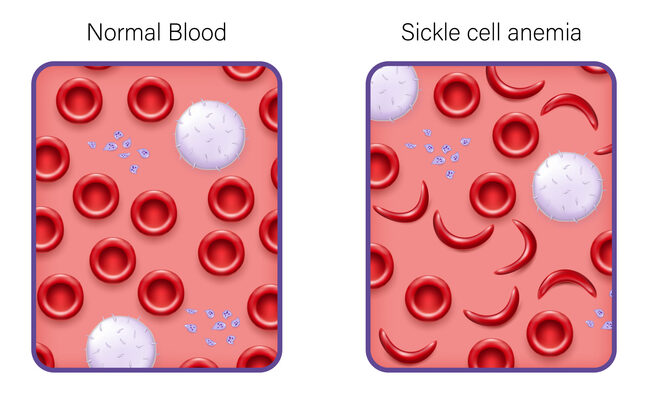
What do you know about sickle cell anemia? Did you know that sickle cell is more common among people of African descent, making sickle cell disease more common in our community? In people without sickle cell disease healthy red blood cells are round and flat and shaped like a disc. They are soft and flexible so they can bend and squeeze through the smallest blood vessels. As they move through the body, they carry oxygen to organs. With sickle cell disease, hemoglobin, the protein inside red blood cells that carries oxygen is abnormal and causes red blood cells to become stiff, sticky, and curved like farm tool called a sickle. These sickle-shaped cells can get stuck in blood vessels and block blood flow causing pain, damage organs, and other serious health problems.
Major symptoms of sickle cell include:
Extreme/chronic pain – Blocked blood flow can cause extreme pain that can last anywhere between a few hours and a few days. People with sickle cell may also suffer from long-term pain even without blocked blood flow.
Delayed growth or puberty – Lack oxygen and nutrients provided by healthy red blood cells can cause infants and children with sickle cell anemia to have developmental and growth delays. Adolescents with sickle cell may experience delays in puberty.
Infections – If the spleen is damaged by sickle cells, it can no longer protect the body from certain infections. This can cause a need for additional vaccinations and antibiotic medications.
Affects Mostly Black Community
Sickle cell anemia is a devastating disease that is primarily experienced by the Black community. In fact, ninety percent of Americans diagnosed with sickle cell disease are Black. The gene is prevalent in areas with a lot of malaria and can protect people against the disease. People with one sickle cell gene from one parent and one normal gene from the other parent have better protection against malaria. However, inheriting sickle cell genes from both parents causes sickle cell anemia.
The good news is that there have been many recent advances in sickle cell treatment, including Casgevy and Lyfgenia, two gene therapies approved by the FDA. These treatments use two different methods to help increase production of healthy hemoglobin and reduce the frequency and severity of painful episodes, or “crises.” Another promising development is a bone marrow transplant procedure that appears to cure the disease.
People living with sickle cell disease often face serious barriers to equitable health care. Implicit bias among health care providers, limited access to specialists, and a lack culturally responsive medical providers can lead to disparities in quality and access to treatment. These barriers must be addressed to ensure that people with sickle cell disease benefit from new treatments including new medications, improved transplant procedures, and gene therapies that offer hope for longer, healthier lives.
See sources here.